Understanding the Importance of a Social Media Strategy
If you’ve ever felt overwhelmed by the sheer number of social media platforms and the constant flow of content, you’re not alone. Businesses often struggle with creating a coherent social media strategy that drives engagement and conversions. According to Smart Insights, over 4.48 billion people use social media worldwide, making it a crucial channel for businesses to connect with their audience. However, without a strategic approach, your efforts might not yield the desired results.
Setting Clear Goals for Your Social Media Strategy
Before diving into content creation, it’s essential to define what you want to achieve with your social media efforts. Are you looking to increase brand awareness, drive website traffic, or boost product sales? Clear goals will inform your content and help measure success. For instance, if your goal is to increase brand awareness, you might focus on reaching a larger audience through paid promotions and partnerships. Conversely, if your aim is to drive sales, you might prioritize conversion-oriented posts and promotions.
Aligning Goals with Business Objectives
Your social media goals should align with your overall business objectives. For example, if your business objective is to expand into a new market, your social media strategy might focus on content that resonates with that specific audience. This alignment ensures that every post contributes to the bigger picture.
Understanding Your Audience
Knowing your audience is foundational to any successful social media strategy. This involves understanding their demographics, interests, and online behavior. Tools like Facebook Insights and Google Analytics provide valuable data about your followers, helping tailor your content to their preferences.
Creating Audience Personas
Developing detailed audience personas can give you a clearer picture of who you’re targeting. These personas should include age, gender, location, interests, and challenges. By understanding these factors, you can create content that resonates and drives engagement.
Choosing the Right Platforms
Not all social media platforms will suit your business. The choice of platform should be based on where your audience spends their time and the type of content you plan to share. For example, Instagram is ideal for visually-driven brands, while LinkedIn suits B2B businesses.
Platform-Specific Strategies
Each platform has its unique features and best practices. Understanding these can help you leverage each platform’s strengths. For instance, Instagram Stories can be used for behind-the-scenes content, while Twitter is excellent for real-time updates and customer service.

Crafting Engaging Content
Content is the backbone of your social media strategy. According to Content Marketing Institute, 70% of marketers are actively investing in content marketing. Your content should be engaging, relevant, and aligned with your brand voice. This includes a mix of images, videos, articles, and interactive content like polls and quizzes.
Content Calendar and Consistency
Developing a content calendar helps maintain consistency in posting. It also allows you to plan for seasonal events and promotions. Consistent posting keeps your audience engaged and helps establish your brand as reliable and authoritative.
Analyzing and Adjusting Your Strategy
Regular analysis of your social media performance is crucial. Tools like Hootsuite and Buffer provide insightful analytics on engagement, reach, and follower growth. According to Statista, 91% of marketers track their social media analytics to measure performance.
Adapting to Trends and Changes
The social media landscape is dynamic, with new trends and features emerging constantly. Staying updated with these changes ensures your strategy remains relevant. For instance, the rise of short-form videos on platforms like TikTok and Instagram Reels has led many brands to adapt their content strategies.
AI Traffic Secrets E-business & E-marketing/Affiliate Marketing
Frequently Asked Questions
What is a social media strategy?
A social media strategy outlines how a business will use social media platforms to achieve its communication and marketing goals.
How do I start a social media strategy?
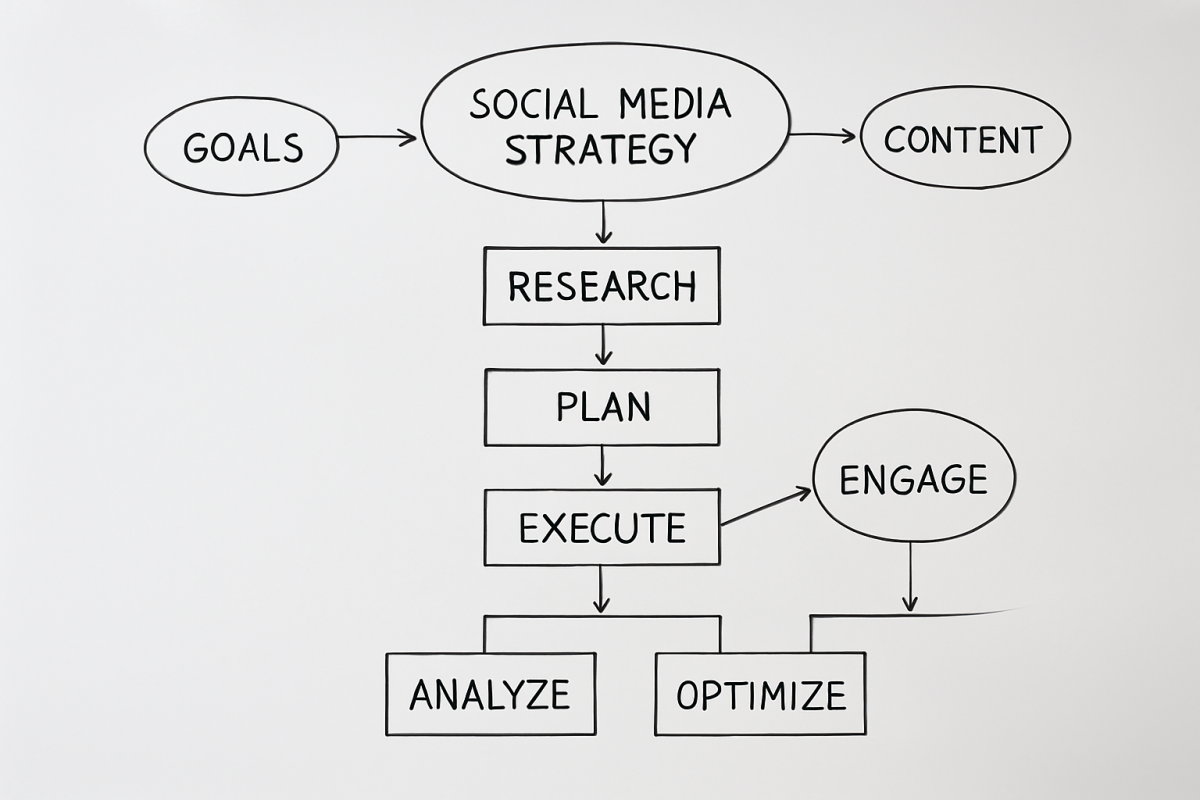
Begin by defining your goals, understanding your audience, choosing the right platforms, and planning your content.
Why is social media strategy important?
It helps streamline efforts, measure performance, and ensure alignment with business objectives for better ROI.
How often should I update my social media strategy?
Review your strategy every quarter or when there are significant changes in your business or social media platforms.
What are common mistakes in social media strategy?
Common mistakes include not setting clear goals, ignoring analytics, and using the wrong platforms for your audience.
Conclusion: Implementing Your Social Media Strategy
In summary, a successful social media strategy involves setting clear goals, understanding your audience, choosing the right platforms, crafting engaging content, and continuously analyzing performance. By following these steps, you can create a strategy that not only enhances your brand’s online presence but also drives tangible business results. For more insights, check out our guide on Mastering the Marketing Funnel to complement your social media efforts.